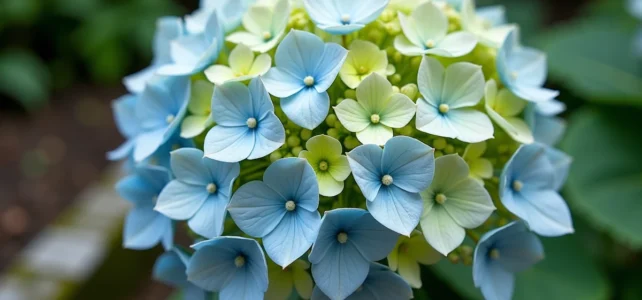
A hydrangea whose flowers turn green often raises concerns. Does the greening indicate a cultural problem, a soil deficiency, or simply a natural cycle of the plant? Understanding what is happening at the level of pigments and soil chemistry allows us to distinguish a normal situation from an imbalance that needs correction.
Aluminum, pH, and pigments: what soil chemistry really changes
Most content on the subject summarizes the color of hydrangeas to a single variable: soil pH. Acidic equals blue, basic equals pink. This framework is incomplete and leads to ineffective corrections.
Related reading : THC and CBD: What is the Difference?
The color of Hydrangea macrophylla flowers depends on the actual availability of aluminum in the soil, not just its acidity. A soil can show an acidic pH while containing very little aluminum that can be absorbed by the roots. In this case, the sepals do not turn blue and may remain in dull, greenish, or washed-out shades.
To understand why my hydrangea is turning green, one must look beyond pH and consider the form of aluminum ions present in the soil. An application of aluminum sulfate acts on both fronts: it slightly lowers the pH and directly provides the Al³⁺ ion that the plant can absorb.
Further reading : Understanding the Difference Between Sheer and Blackout Curtains: Choosing the Right Window Treatment
| Factor | Effect on color | Common trap |
|---|---|---|
| Soil pH (acidic, below 5.5) | Promotes blue if aluminum is available | Acidic soil but low in aluminum: no blue |
| Soil pH (basic, above 6.5) | Promotes pink, blocks aluminum absorption | Calcareous watering water that raises pH without suspicion |
| Available aluminum | Determines the intensity of blue | Adding vinegar or lemon does not provide aluminum |
| Calcareous tap water | Gradually raises pH, causing pinking or dulling | Regular watering with calcareous water nullifies soil corrections |
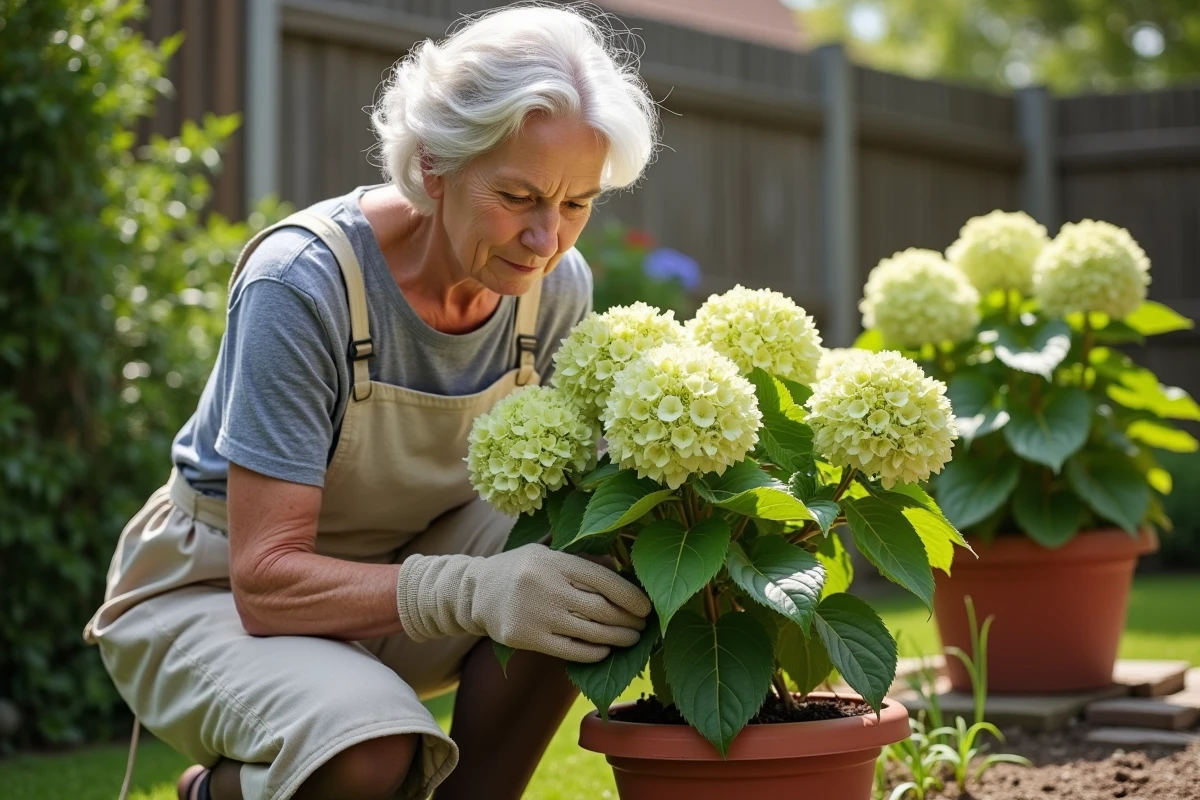
Greening at the end of flowering: a natural cycle not to be confused with a problem
In the majority of hydrangeas, the sepals naturally turn green at the end of flowering. The original pigments (anthocyanins for blue and pink) fade as the flower enters the maturation phase. Chlorophyll then takes over in the sepal tissues, resulting in this characteristic green hue.
This phenomenon is particularly visible in large-headed varieties (macrophylla) between late summer and early autumn. The flowers go through intermediate shades, sometimes burgundy or bronze, before drying.
Natural greening is distinguished from a cultural problem by two simple criteria:
- It appears gradually on the oldest flowers, not on the new inflorescences.
- The foliage remains green and vigorous, without yellowing or spots.
If the flowers turn green as soon as they open, however, the problem lies elsewhere: excess nitrogen in the fertilizer, lack of light, or soil imbalance.
Chlorosis and iron deficiency: when leaves yellow and flowers dull
A hydrangea with leaves yellowing between the veins (which remain green) exhibits iron chlorosis. This iron deficiency directly affects chlorophyll production and, by extension, the quality of flowering. Flowers produced on a chlorotic plant are often pale, washed-out, or greenish.
Chlorosis is not always related to a lack of iron in the soil. A pH that is too high blocks the absorption of iron by the roots, even if the element is present. Watering with calcareous tap water is one of the most common factors that raise pH in pots as well as in the ground.
Correcting chlorosis in hydrangeas
- Use a chelated iron (sequestered iron) for watering at the base, which is more effective than a simple application of iron sulfate.
- Switch to non-calcareous watering: rainwater, filtered water, or rested water.
- Mulch with slate or pine bark to stabilize soil acidity in the long term, keeping in mind that results may take one to two seasons in the ground.
- Check the drainage of the pot or bed: waterlogged soil worsens deficiencies by suffocating the roots.
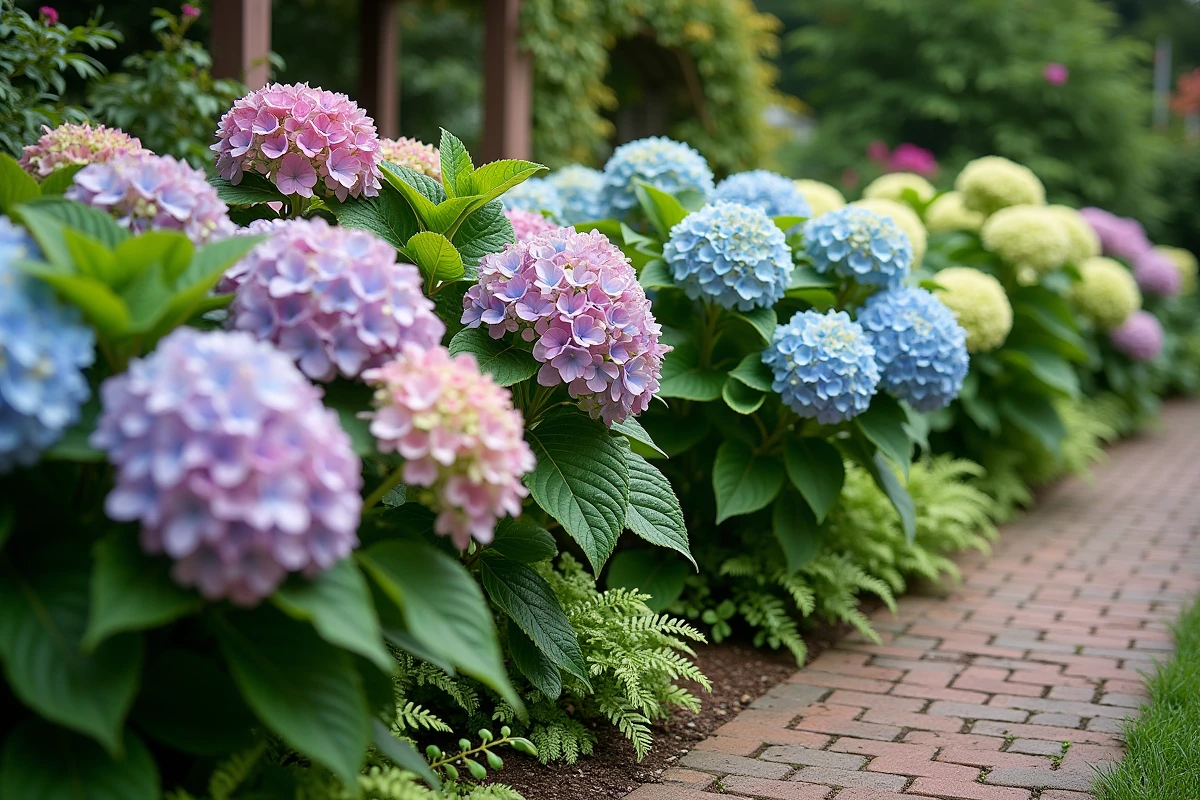
Fertilizers and exposure: two levers often miscalibrated
An excess of nitrogen in fertilization pushes the hydrangea to produce foliage at the expense of flowering. Flowers that form under these conditions are often smaller and greener, as the plant prioritizes vegetative growth.
For colorful flowering, a fertilizer rich in potash and phosphorus, such as “heather soil plants,” is preferable to a balanced universal fertilizer. The application is done in spring, before the formation of flower buds. Too nitrogen-rich a fertilizer promotes foliage and dulls the flowers.
Exposure also plays a direct role. A hydrangea placed in dense shade receives too little light to synthesize intense pigments. Conversely, burning sun can bleach the sepals in just a few days. The ideal situation for most Hydrangea macrophylla remains a bright semi-shade exposure, with morning sun and shade during the hot hours.
A hydrangea turning green does not always require intervention. When the greening affects aging flowers on a plant with healthy foliage, it is the normal cycle of the plant. The problem deserves attention only when new flowers open green, when the foliage yellows, or when the coloring never settles. In these cases, soil, watering water, and fertilization are the three parameters to examine first.