Yves Rocher occupies a unique place in the French cosmetics landscape: a brand backed by a vertically integrated model, from the cultivation of plants in La Gacilly to direct sales. This position, long protected by a network of owned boutiques and a very wide catalog, is now being challenged by players with very different profiles.
The beauty market in France is no longer just a face-to-face competition between perfume brands and mass-market brands. To accurately map Yves Rocher’s competitors on Babioles Beauté, it is necessary to go beyond simple price or range comparisons and examine the criteria on which the rivalry is actually played out: verifiable environmental commitment, ingredient transparency, and the ability to attract a younger clientele.
Measurable CSR: the ground where Yves Rocher is losing ground to Kiko and The Body Shop
Naturalness has long been enough to differentiate Yves Rocher. The discourse on plant-based active ingredients and “botanically born” cosmetics worked when consumers were satisfied with reading “plant-based” on a package. This is no longer the case for Generation Z, which demands documented proof.
The Body Shop has historically structured its image around fair trade and the fight against animal testing. The brand has obtained third-party certifications for its sourcing, particularly for shea butter. Kiko, on the other hand, has invested in reducing the carbon footprint of its packaging and communicates on zero deforestation goals.
Yves Rocher highlights its domain in La Gacilly and its tree-planting commitments. The difference lies in verifiability: third-party labels carry more weight than a self-declared brand discourse. The youngest consumers consult ingredient databases and independent comparators before purchasing a face cream.
Aroma-Zone and the DIY model against Yves Rocher’s skincare
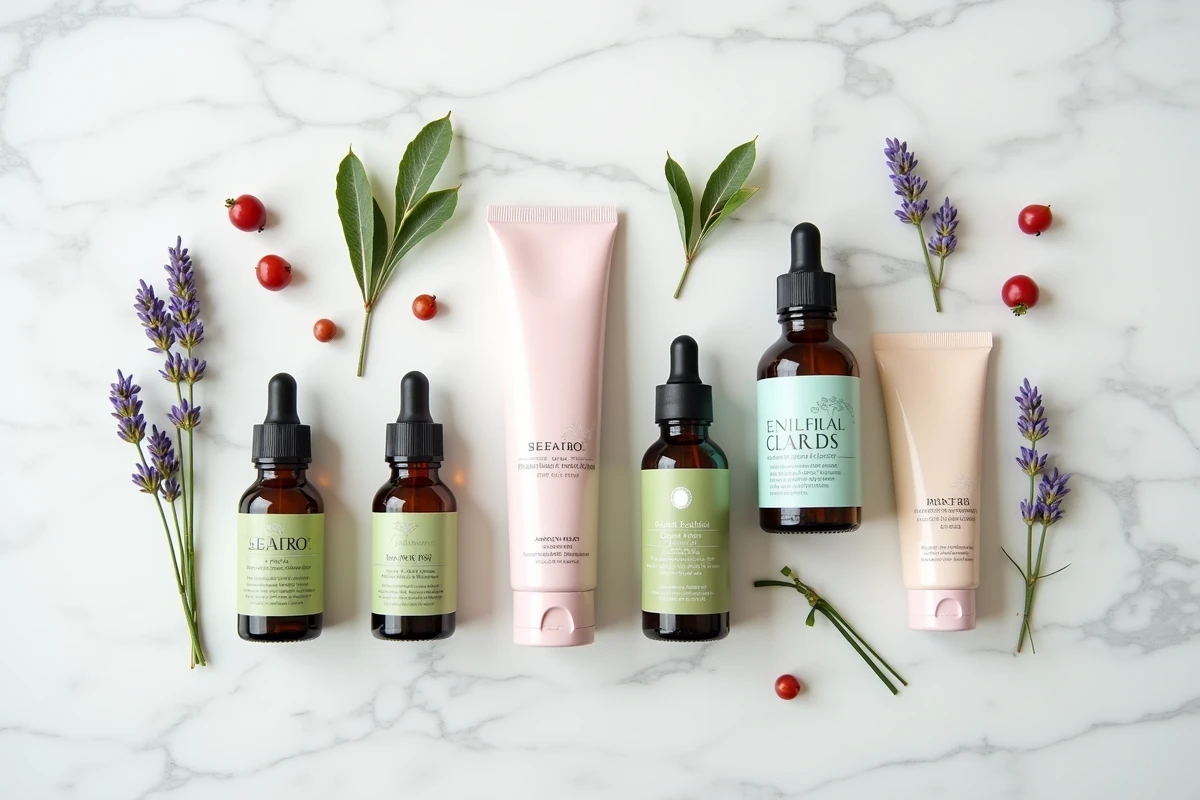
Aroma-Zone does not sell finished products in the same way as Yves Rocher. Its positioning is based on raw ingredients (essential oils, cosmetic actives, neutral bases) and on the consumer’s ability to formulate their own skincare. This model attracts a clientele that wants to control every component applied to their skin.
According to online search data analyzed by Yourban Intelligence, Aroma-Zone was among the most searched beauty brands in France in June 2025, alongside Sephora and Yves Rocher. This popularity reflects a fundamental shift: some consumers no longer want to delegate formulation to a brand, no matter how “natural” it may be.
- Aroma-Zone publishes complete technical sheets for its ingredients, with recommended concentrations and contraindications, which no finished product brand does at this level of detail.
- The price per gram of pure actives remains much lower than that of a formulated skincare product, even at Yves Rocher, which offers accessible prices.
- The online community around DIY cosmetics generates a volume of content and reviews that boosts Aroma-Zone’s SEO without a massive advertising budget.
Aroma-Zone does not compete on the same ground as Yves Rocher, but captures the same clientele: individuals concerned about naturalness and controlled prices.
Sephora, Nocibé, and the weight of networks in cosmetic competition
Sephora and Nocibé are multi-brand distributors, not direct competitors in the strict sense. Their role in eroding Yves Rocher’s position lies in their ability to concentrate the offer.
A consumer entering Sephora has access to several dozen brands of skincare for the face, body, and hair, with the possibility to test in-store. Yves Rocher, with its network of mono-brand boutiques, cannot offer this diversity. The mono-brand model loses attractiveness when the consumer wants to compare.
The social media factor
Multi-brand retailers also benefit from the support of beauty influencers. A content creator testing a Sephora product potentially reaches the audiences of all the brands distributed. Yves Rocher must generate its own visibility on social media, which requires a proportionally heavier investment for a single brand.
Data from Yourban Intelligence shows that Sephora reached 1,500,000 online searches in June 2025, a volume that confirms the brand’s dominance among the most popular beauty distributors in France.
Reuse of cosmetic packaging: a new differentiation criterion among brands
In April 2026, several major names in beauty (L’Oréal, Chanel, Yves Rocher, Sephora, Aroma-Zone) published the conclusions of a year-long experiment on the reuse of packaging, according to an article from Circuits-Bio. This project, which anticipates European regulatory obligations, tests the feasibility of deposit or refillable containers on a large scale.
Yves Rocher participates in this initiative, which is a positive signal. The question is whether this participation translates into real deployment in stores or remains at the experimental stage. Field feedback varies on this point: some brands have integrated reuse into their customer journey, while others are still in the pilot phase.
- L’Oréal and Chanel bring to this experiment industrial means that a mid-sized brand cannot mobilize alone.
- Reuse imposes a logistics of collection and cleaning of containers, the cost of which remains a barrier for brands with accessible prices.
- The consumer will not pay more for a reusable package if the competing disposable product costs less, which puts Yves Rocher in a difficult trade-off between ecological commitment and price positioning.
Natural cosmetic brands: where does Yves Rocher really stand against its rivals
The promise of naturalness from Yves Rocher relies on the use of plant extracts cultivated or sourced by the group. This approach, pioneering in the 1980s, has become a standard. Brands like Caudalie, Nuxe, or So’Bio Étic offer formulations based on natural origin ingredients with organic certifications that the majority of Yves Rocher products do not display.
The “Que Choisir” comparison on undesirable ingredients in skincare allows consumers to verify the actual composition of products. In this area of analytical transparency, reputation does not replace certification. A Yves Rocher cream containing controversial ingredients according to these databases loses its “naturalness” advantage against a certified organic competing product, even if sold at a higher price.
The beauty market in France is restructuring around criteria that mere notoriety can no longer satisfy. Yves Rocher retains real advantages (price, territorial network, vertical integration), but its competitors are advancing on the dimensions that buyers consult before checking out: verifiable composition, documented CSR commitments, accessibility of information.