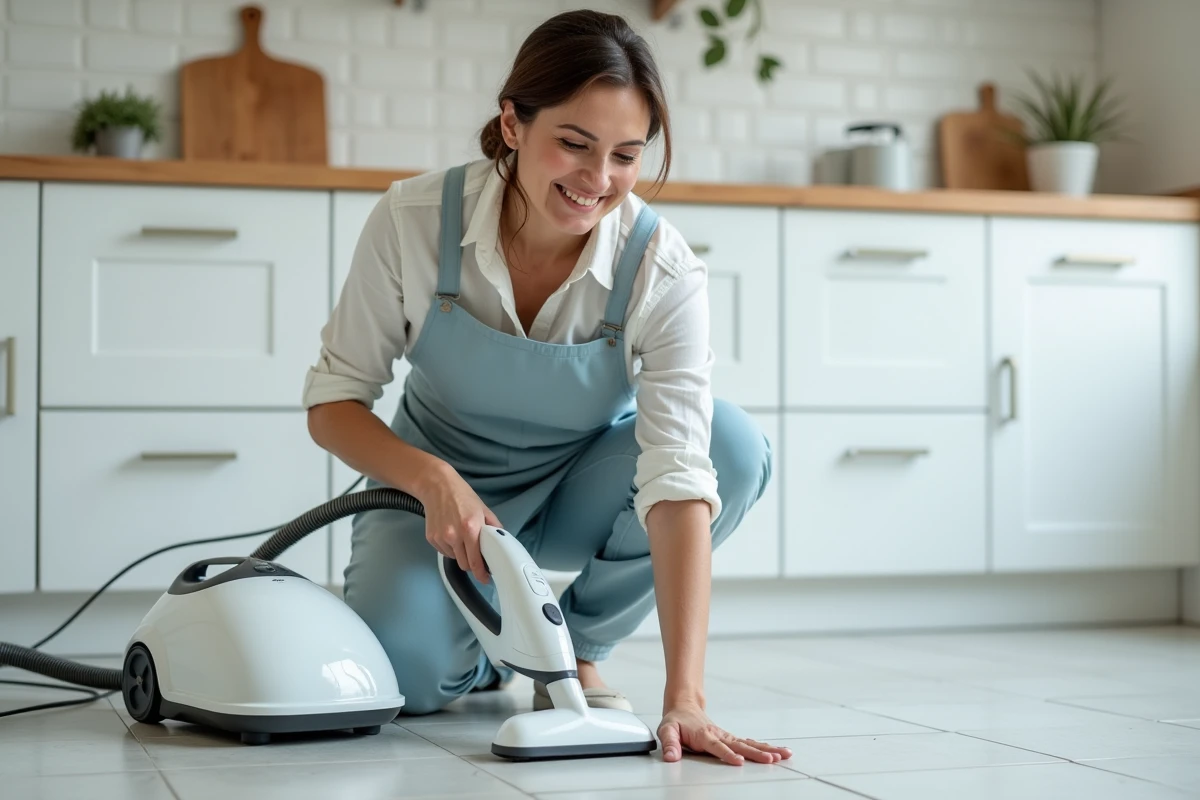
The Silvercrest steam cleaner sold at Lidl boasts a power of 1500 W and a modest capacity tank. These two parameters dictate the entire logic of use, from filling to managing passes on each surface. Here, we detail the settings and practices that get the best out of this device, including in terms of energy consumption.
Adjusting steam production according to the type of floor
Most tutorials simply describe the assembly of the device. The technical point that truly changes the outcome is adapting the steam flow to the surface being treated.
On smooth tiles, steam production can be pushed to the maximum. The non-porous surface reflects heat, which accelerates the removal of greasy dirt. On laminate or varnished wood floors, we recommend reducing the flow and never leaving the mop stationary for more than a few seconds. Excess moisture seeps into the joints and causes irreversible swelling.
For carpets, attach the dedicated accessory and work with slow passes. The steam should penetrate the fibers deeply without saturating the textile with water. A pass that is too quick leaves dirt in place, while a pass that is too slow soaks the carpet.
If you consult the user manual for the Silvercrest Lidl steam cleaner, you will find the selector positions corresponding to each flow level, which makes these adjustments easier on a daily basis.
Water and electricity consumption: using the Silvercrest in an eco-friendly way
A steam cleaner consumes significantly less water than a traditional bucket wash, provided you do not empty the tank for a single room. The eco-friendly approach relies on three concrete levers.
Fill the tank to the right level
Only fill the tank halfway for small areas. The device heats up faster with less water, which reduces the duration of resistance use. In a kitchen or bathroom, half a tank is more than sufficient. Reserve full filling for sessions covering multiple rooms.
Unplug as soon as cleaning is finished
The Silvercrest maintains heating as long as it is plugged in. Every minute on standby at the outlet consumes electricity without producing useful cleaning. Unplug the device as soon as the last pass is completed, even before disassembling the accessories.
Prepare surfaces in advance
- Vacuuming or sweeping the floors before steaming eliminates solid particles. The steam then acts directly on grease and stains, without wasting additional passes.
- Removing objects from the floor (light rugs, chairs) avoids stops and starts that prolong heating time.
- Grouping the cleaning of all rooms into a single session allows you to utilize a single heating cycle instead of several.
These combined practices significantly reduce overall water and electricity consumption without compromising results.
Maintaining the tank and descaling the Silvercrest steam cleaner
Limescale is the primary cause of failure in this type of device. A scaled heating element takes longer to produce steam, consumes more, and eventually blocks the circuit.
We recommend descaling every four to six uses in hard water areas. The safest method is to fill the tank with a mixture of water and white vinegar (about one-third vinegar), let it sit for about twenty minutes without heating, and then rinse thoroughly with clear water before the next use.
A often overlooked point: always empty the tank after each use. Stagnant water accelerates limescale deposits and can develop bacteria in the circuit. Air drying, with the tank open and the device unplugged, extends the lifespan of the heating element.
Safety and handling of the power cord
The power cord of the Silvercrest is long enough to require working close to the outlet. Using a standard extension cord is not recommended with a device of this power: the gauge of the extension cord must be appropriate to avoid overheating.
When in use, keep the cord behind you to avoid rolling over it with the device or tripping. Never pull on the cord to unplug it, grasp the plug directly. This simple action prevents internal wire breaks, a common cause of electrical failures in entry-level steam cleaners.
The handle of the device may get slightly warm at the end of a prolonged session. If you are moving through multiple rooms, a pause of one to two minutes between areas allows the plastic of the handle to cool down and limits wrist fatigue.
Accessories and surfaces compatible with the Silvercrest Lidl
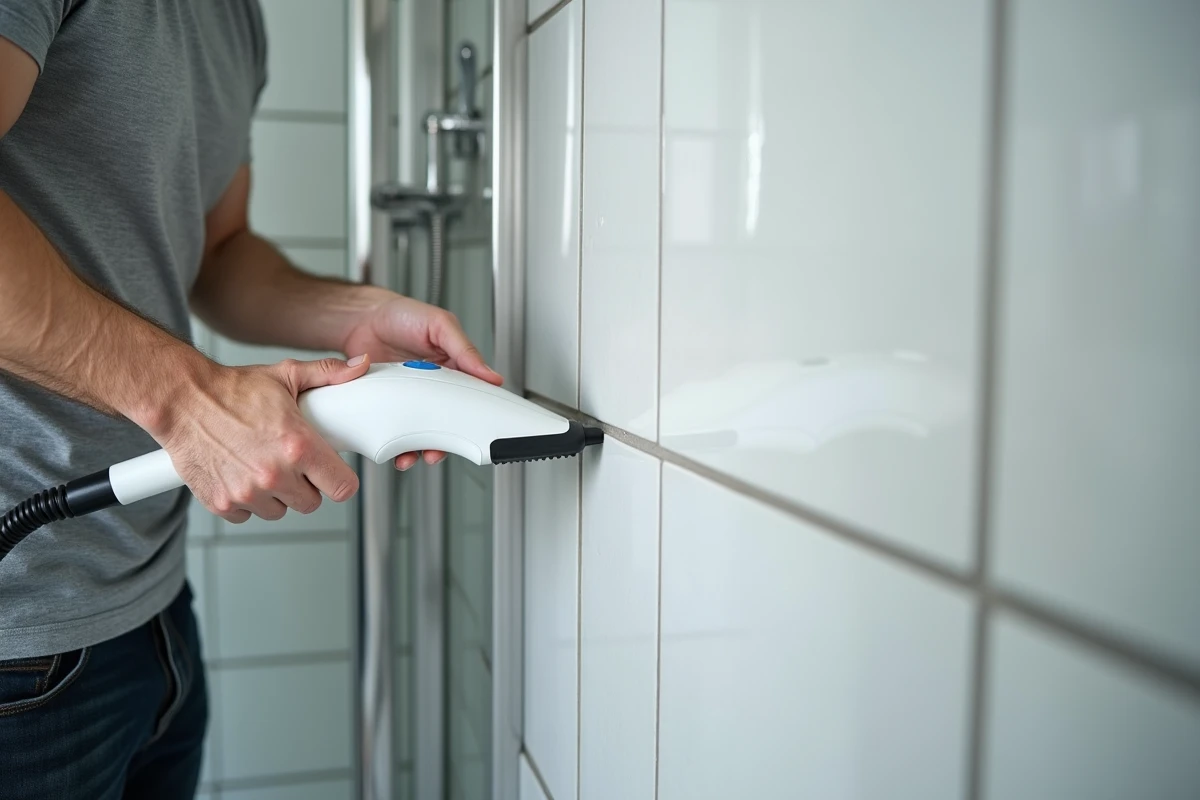
The kit delivered with the device generally includes a concentration nozzle, a window squeegee, and washable mop pads. The concentration nozzle is the most versatile accessory: tile joints, faucets, cooktops.
- On bathroom joints, apply the nozzle a few centimeters away and hold the steam for a few seconds before scrubbing with a brush. The result far exceeds that of a conventional chemical product.
- On windows, the squeegee works best if you wipe immediately after steaming. Allowing condensation to settle creates streaks.
- The washable microfiber mop pads should be changed as soon as they are visibly dirty, not at the end of the session. A saturated mop spreads dirt instead of absorbing it.
Surfaces to absolutely avoid: untreated raw wood, leather, and delicate textiles like silk. Steam at this power penetrates natural fibers and can cause permanent deformation.
The Silvercrest steam cleaner from Lidl remains an effective entry-level device when used within the limits of its design. Proper filling, regular descaling, and adherence to compatible surfaces are sufficient for reliable use over several years.