A municipal football field closed for renovations, a gym slot already full, weather that cancels the Sunday bike ride: we all know these situations where free sports practice faces very concrete obstacles. Practicing your favorite sport freely requires anticipating these constraints, not just finding motivation.
Sports practice outside of clubs: a framework to build yourself
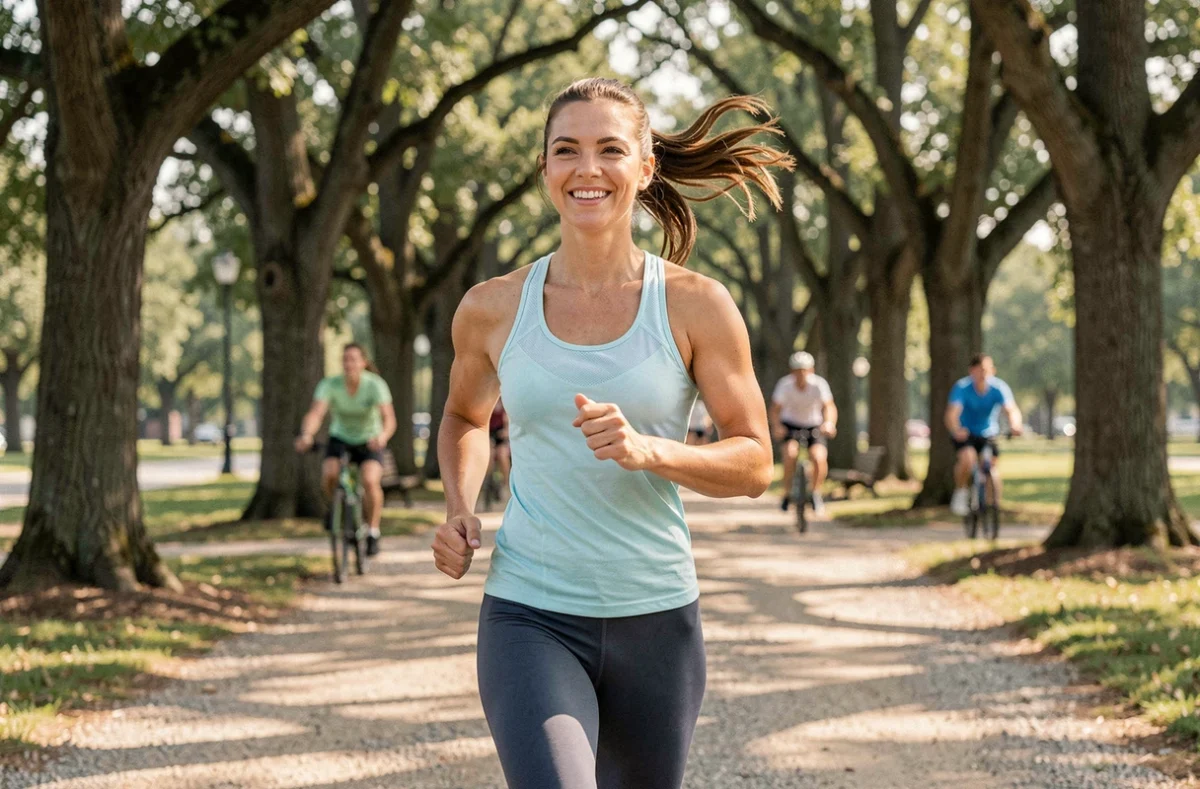
The majority of people who regularly engage in sports in France are not registered in any club or federation. Running, fast walking, cycling, home weight training: these activities can be practiced without a license, without imposed schedules, without supervision. This freedom has a downside: one is alone in organizing their progress, managing the risk of injury, and finding suitable locations.
The first operational reflex is to identify accessible infrastructures without registration. Urban parks with marked trails, secure bike paths, municipal stadiums open at certain times. You can also explore the freesport.fr website for sports to identify activities and disciplines that can be practiced without subscription constraints.
Mapping your spots before planning your sessions changes the game. A running route identified in advance with a water point, a bench for stretching, and a decent surface reduces last-minute excuses.
Adapting your sports equipment to the actual terrain
We often talk about choosing “the right sport.” In practice, the problem arises differently: you already have an activity in mind, and it’s the poorly calibrated equipment that hinders consistency.
Shoes and practice surface
Running on asphalt with trail shoes, cycling in the city with a heavy mountain bike: these mismatches between equipment and terrain cause discomfort, premature fatigue, and sometimes injuries. The rule is simple: adapt the shoe or equipment to the main practice surface, not to the image you have of the sport.
Technical clothing and local weather
Practicing outdoors year-round (including in winter) requires a minimum of textile layering. Feedback on this varies by region and sport, but one principle remains reliable: three adjustable layers are better than a single thick jacket.
- Breathable base layer to wick away sweat, even in cold weather.
- Insulating mid-layer (thin fleece or softshell) for sessions below ten degrees.
- Windproof and water-repellent outer layer for light rain or strong wind.
This system works for running, cycling, hiking, and most outdoor sports. For indoor or home activities, a single comfortable and breathable garment is sufficient.
Reducing sedentary behavior outside of sports sessions
You can run three times a week and still sit for eight hours a day. Prolonged sedentary behavior poses a distinct risk from physical inactivity. French recommendations emphasize a specific point: interrupt prolonged sitting periods by standing up and walking for at least a few minutes every hour.
What does this mean in practice for someone who works in an office or studies all day? Three simple actions:
- Set an alarm every fifty minutes to stand up, walk to a water point, or do a few squats.
- Prefer phone calls while standing or walking, even within a small area.
- Replace a short transport trip with walking or cycling when the distance allows.
These micro-movements do not replace a sports session. They complement regular sports practice by limiting the negative effects of prolonged sitting.
Sports on prescription and adapted physical activity
Since 2016, and with an expansion in 2023, certain patients with long-term conditions or chronic diseases can benefit from a referral to adapted physical activity supervised by qualified professionals. This system, sometimes referred to as “sports on prescription,” opens access to specific slots in partner facilities.
However, access remains unequal across the territory. National funding is still insufficient, and not all cities have trained professionals to supervise these populations. If you are affected, the primary contact remains your general practitioner to check eligibility and identify local facilities.
The national sports-health strategy 2025-2030
France has deployed a public policy aimed at “sports for all,” formalized in the national sports-health strategy 2025-2030. This orientation specifically targets populations distanced from physical activity: elderly people, individuals with disabilities, residents of priority neighborhoods.
These public initiatives complement free practice without replacing it. One can very well run alone on Tuesday and participate in a supervised adapted physical activity session on Thursday, depending on their needs and condition.
Free and digital formats for practicing without constraints
Campaigns like “September Move” show that the trend is towards open and accessible formats. The idea: to offer free sessions, collective challenges, and digital resources to encourage regular practice without requiring a subscription.
For those who prefer to practice alone, tracking apps (running, cycling, weight training) allow structuring sessions with minimal framework. A simple and regular program is better than an ambitious plan abandoned in three weeks.
The classic trap remains to multiply digital tools to the point of spending more time configuring your app than moving. A stopwatch, a mapped route, and a pair of suitable shoes cover most needs for running or power walking.
Freeing up time in your weekly schedule produces more lasting effects than multiplying infrastructures or gadgets. Practicing sports freely relies more on personal organization and terrain choices than on accumulating equipment or subscriptions.