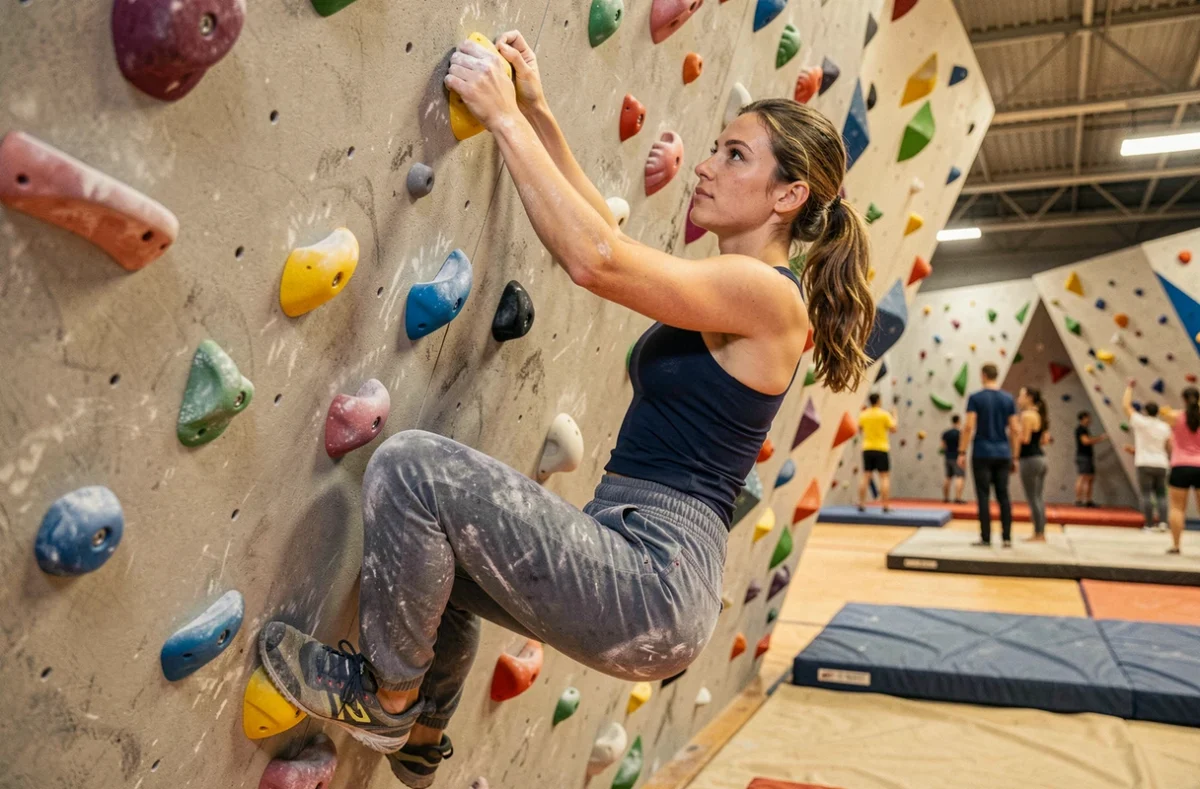
Lens and Liévin have no natural climbing sites within a twenty-kilometer radius. The nearest rock, Hydrequent in Rinxent, is over eighty kilometers away. Local practice therefore relies entirely on indoor climbing gyms, and the mining basin has several with very different formats: bouldering, auto-belaying, FFME affiliated clubs. Comparing these structures requires looking beyond just the number of walls.
Bouldering, auto-belaying, and club routes: three climbing formats in Lens Liévin
The most significant distinction between the gyms in the area is not based on size or the number of holds, but on the type of practice offered. Each format involves different levels of autonomy, target audiences, and equipment.
| Gym / Club | Main Format | Target Audience | Additional Services |
|---|---|---|---|
| Vertical’Art Lens Liévin | Bouldering | All levels, adults and teens | Cardio-fitness, bar, restaurant |
| Hapik (Liévin) | Auto-belaying | Families, children from 4 years old, beginners | Birthday packages, supervised sessions |
| Club Alpin de Wingles | Routes (FFME club) | Regular climbers, competitors | Federal supervision, fixed time slots |
| HTG | Routes / bouldering (club) | Intermediate to advanced climbers | Structured training |
| Club Alpin d’Arras | Routes (FFME club) | Climbers from the Artois basin | Organized outdoor climbing trips |
An autonomous climber who wants to do bouldering after work will find that Vertical’Art is the only option with free access in the Lens Liévin area, without the obligation of an annual club membership. To list the best climbing gyms near Lens Liévin, one must also consider facilities located in a wider radius, towards Lille or Arras.
The FFME affiliated clubs (Wingles, HTG, Arras) operate on reserved time slots and require a federal license. This model suits those looking for a regular training framework with supervised progression, not for a spontaneous family outing on a Saturday afternoon.
Family climbing in Liévin: the minimum age criterion
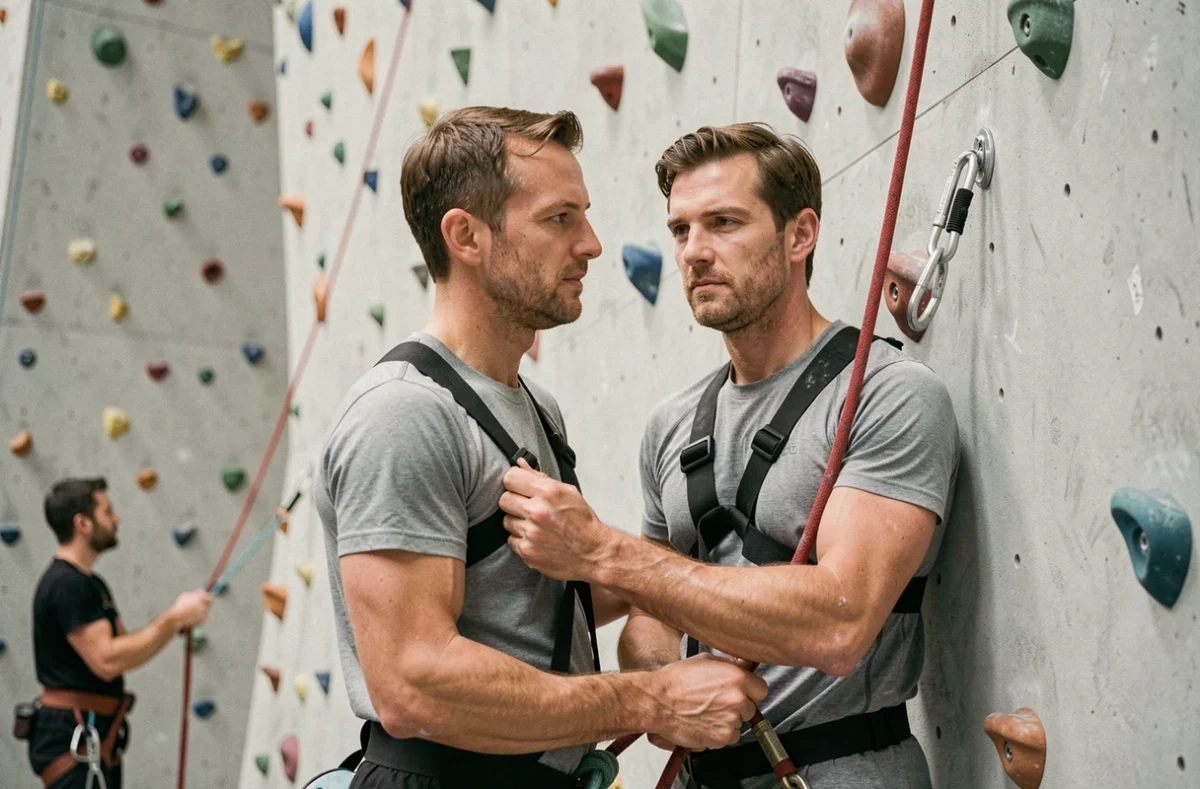
Hapik stands out with its auto-belaying system, which eliminates the need for a trained belayer at the base of the wall. Children can climb from the age of 4, making it the most accessible facility in the area for families with young children.
Vertical’Art, on the other hand, offers holiday camps with differentiated time slots based on age, as well as a “Kids on Bloc” day that includes a dedicated offer for children. These occasional activities are not part of the permanent schedule: they depend on the school calendar and the site.
The Vertical’Art network also specifies that ages, schedules, durations, and prices for camps vary from one site to another. Checking the local Lens Liévin page before booking helps avoid unpleasant surprises, especially during the All Saints’ Day or February holidays when spots fill up quickly.
Which format to choose for a first session with children
- Auto-belaying (Hapik): suitable for toddlers, no prior experience needed, supervision integrated into the technical setup
- Bouldering (Vertical’Art): accessible without specific equipment, but younger children must be constantly accompanied in the landing areas
- FFME Club (Wingles, HTG): requires registration, a license, and often a medical certificate, which excludes occasional outings
Vertical’Art Lens Liévin: climbing gym or community space
The uniqueness of Vertical’Art compared to other facilities in the area lies in its hybrid positioning. The gym includes a cardio-fitness area, a bar, and a restaurant under one roof. This model, imported from the national Vertical’Art network, transforms a bouldering session into a complete outing.
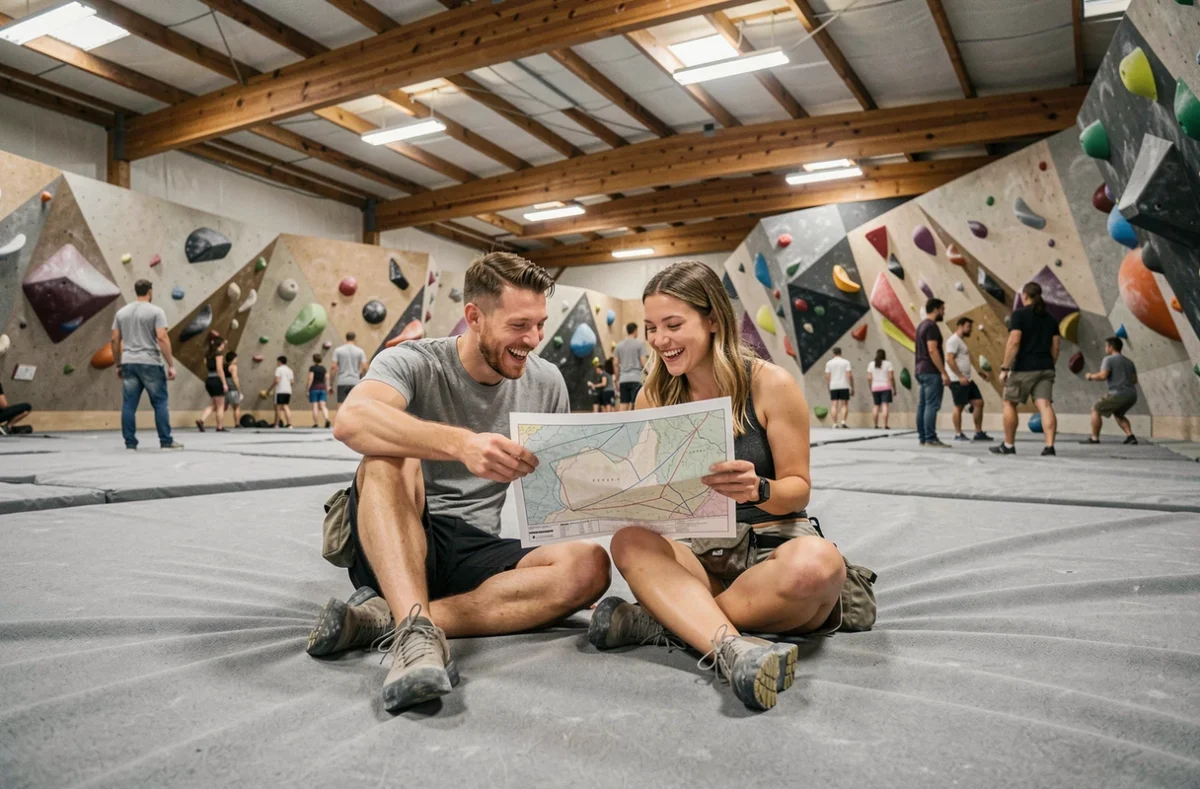
For a regular climber, the monthly subscription provides access to both bouldering and fitness, making the trip worthwhile compared to two separate subscriptions. The network also offers rates through company committees, indicating that the target clientele extends beyond just climbing enthusiasts.
Student offers (Student Monday, reduced rates on subscriptions) target a young, urban audience. In an area like Lens Liévin, where indoor sports leisure alternatives are limited, this strategy attracts participants who might not have come solely for climbing.
Lack of local cliffs: what it changes for progression
The nearest natural site, Hydrequent, is located in Rinxent in the Boulonnais. More than 80 kilometers separate Lens from the first cliff. This distance has a direct consequence on practice: climbers in the mining basin progress almost exclusively indoors.
The FFME affiliated clubs occasionally organize outdoor climbing trips, which is their main advantage over commercial gyms for climbers who want to touch real rock. A member of the Club Alpin de Wingles or Arras can access supervised weekends at natural sites in the North or Belgium.
For pure bouldering practitioners, the lack of local cliffs has no impact: indoor bouldering is a standalone discipline, with its own ratings and competitions. The indoor bouldering scene is self-sufficient for those not seeking long routes.
The choice between a commercial gym and a federal club ultimately depends less on skill level than on the intended use. An occasional outing with family or friends naturally leans towards Vertical’Art or Hapik. A year-long progression project, with access to outdoor climbing and technical supervision, goes through the clubs. The Lens Liévin area offers both options, which is not the case in all medium-sized French cities.